The Complete Guide to SEO Link Building for Beginners
The Complete Guide to SEO Link Building for Beginners
SEO link building helps your website rank higher on Google by earning backlinks from other sites. Think of backlinks as "votes of confidence" that tell search engines your content is trustworthy. Here’s the key takeaway: Better backlinks = higher rankings + more organic traffic.
If you’re new to this, don’t worry. This guide breaks it down into simple steps:
- Understand Backlinks: Links from reputable sites improve your credibility. Avoid links from spammy or low-quality sources.
- Types of Links: Focus on "dofollow" links for SEO impact, but "nofollow" links can still drive traffic.
- Set Goals: Define what you want - better rankings, more traffic, or keyword visibility.
- Research Competitors: Analyze their backlinks and identify opportunities to replicate.
- Start Simple: Use methods like guest blogging and directory submissions.
- Track Progress: Monitor metrics like referral traffic, keyword rankings, and domain authority.
For beginners, tools like Linkzy can streamline the process by automating link placement and tracking results. Remember, link building takes time, but staying consistent with quality efforts will pay off in the long run.
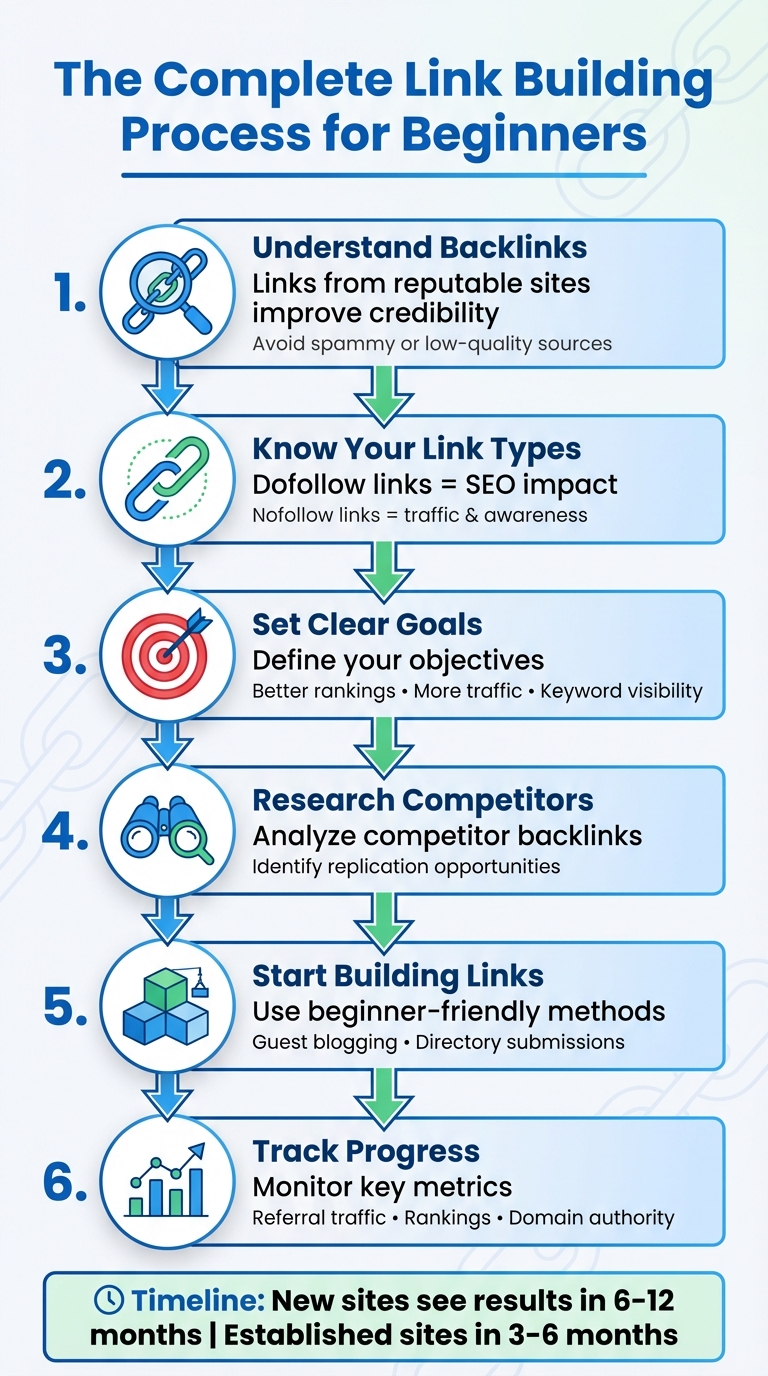
6-Step Link Building Strategy for Beginners
Link Building Basics
What Backlinks Are and How They Work
A backlink is simply a link from one website to another, and it plays a key role in how search engines evaluate your content. Think of it as a vote of confidence - when a reputable site links to your page, it signals to search engines that your content is worth paying attention to. For example, a link from a major news outlet carries significant weight, boosting your site's credibility and rankings. On the other hand, links from low-quality or spammy sites don’t offer much value and can even harm your reputation. Backlinks remain one of Google's most important ranking signals, making them essential for increasing search visibility and attracting organic traffic.
Grasping these basics is the first step toward understanding the different types of links and their impact.
Dofollow vs. Nofollow Links
Dofollow links are the gold standard in link building. They pass on link equity - often called "link juice" - which tells search engines that the linked content is trustworthy and relevant, directly boosting your rankings. In contrast, nofollow links use the HTML attribute rel="nofollow", signaling search engines not to pass link equity [1][2][3]. While nofollow links don’t contribute to rankings in the same way, they can still drive traffic and increase awareness of your site.
Link Building for Beginners: Complete Guide to Get Backlinks
How to Build a Link Building Strategy
Creating a successful link building strategy isn't about collecting as many links as possible. Instead, it’s about crafting a focused plan that targets high-quality, niche-relevant sites. Without a clear strategy, your efforts might end up chasing links that offer little value. Here’s how to lay the groundwork for a practical and effective link building approach.
Setting Link Building Goals
Start by defining what you want to achieve. Are you looking to boost your domain authority? Or maybe you’re aiming to rank for specific high-conversion keywords? Your goals should align closely with your business objectives - whether that’s increasing visibility, driving more traffic, or turning clicks into sales [5][11].
Keep your expectations realistic, especially when it comes to timing. For newer websites, it might take 6–12 months to see noticeable improvements in rankings. If your site is more established, you could start seeing changes within 3–6 months [5][10].
Researching Your Niche and Competitors
The most valuable links often come from websites that are already covering topics similar to yours. These niche-relevant links send strong signals to Google, helping establish your site as an authority in your area [7][9].
Take a closer look at your competitors’ backlink profiles. Are they being featured in industry roundups, cited in news articles, or listed on resource pages? These patterns can guide you toward quality linking opportunities. Use this insight to create content that positions your brand as a trusted resource - something that’s becoming increasingly important for both traditional search engines and AI-driven results [8].
Planning Your Link Acquisition
Aim for steady and natural link growth. A sudden surge in backlinks, especially if your site has had little activity before, can raise red flags with search engines. Gradual growth looks more organic and helps build long-term credibility.
Diversify your backlink sources to keep things natural. This could include guest posts, directory listings, social mentions, and partnerships, all while using varied anchor texts. A diverse link profile not only drives genuine traffic but also reduces the risk of penalties from search engines [4]. Once you’ve mapped out your strategy, you can dive into beginner-friendly techniques to start putting it into action.
Simple Link Building Methods for Beginners
Now that you've outlined your strategy, it's time to bring it to life. These beginner-friendly techniques are practical, budget-conscious, and don't demand advanced technical skills - just commitment and effective outreach.
Guest Blogging and Content Outreach
Guest blogging is all about creating well-crafted posts for websites within your niche, including a natural backlink to your site. This approach helps you earn valuable links that can enhance your site's authority and improve search rankings[12][13]. The focus here should be on quality, not quantity. Identify blogs your target audience frequents, then pitch original, problem-solving content. Personalize your outreach to make it engaging and informative, ensuring your content aligns with the blog's tone and audience.
Directory Submissions and Local Listings
Submitting your business to online directories and local listings is an easy way to build backlinks while improving your visibility in local search results. The best directories are industry-specific, location-relevant, have strong domain authority, and maintain an active user base with an editorial review process[14][16]. While DoFollow backlinks are often preferred for SEO, NoFollow links from trusted directories still add value by driving traffic, establishing relevance, and boosting brand recognition[14][15][16]. These links also enhance your presence in local search and the Google Local Pack. Start with key platforms like Google Business Profile, Yelp, and other directories specific to your industry. Make sure your business name, address, and phone number (NAP) are consistent across all listings. These simple steps can significantly reinforce your link building efforts.
sbb-itb-0f47b19
Using Tools to Simplify Link Building
While traditional methods of link building can work, they often require a significant time investment. Automation tools, on the other hand, streamline these tasks and help scale your efforts. Instead of spending hours on manual outreach and follow-ups, these tools act like a virtual assistant, handling repetitive tasks so you can focus on strategy and creating great content.
Why Use Automation Tools?
The primary benefit is saving time. Automation tools take care of identifying potential sites and sending outreach emails, tasks that would otherwise take days. This not only speeds up the process but also helps secure multiple backlinks in less time - without needing to hire extra staff. Another advantage? These tools can analyze competitor strategies to uncover opportunities you might have missed, giving you an edge in your link building efforts [17]. Platforms like Linkzy are designed to simplify and enhance every step of this process.
What Does Linkzy Offer?
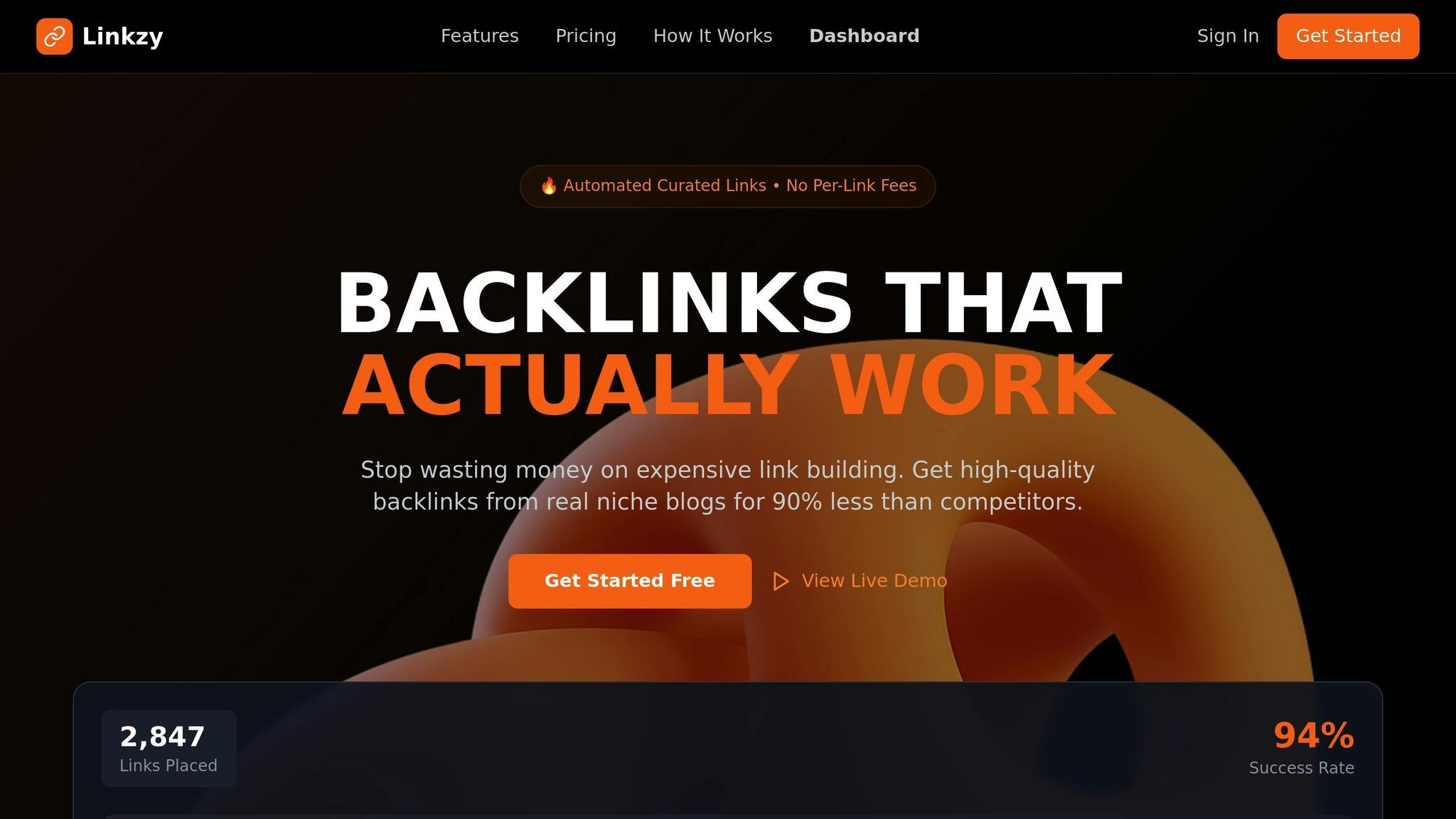
Linkzy takes the hassle out of link building by automating backlink placement on websites that match your niche. Its AI-driven system identifies relevant opportunities and places your links naturally within contextual content. You’ll also get access to real-time analytics to track backlink performance, placement, and domain authority.
The platform supports all major website platforms, whether you’re using WordPress, Shopify, or a custom-built site. Plus, with its API and WordPress integration, tracking and managing your backlinks becomes seamless. These features fit smoothly into your overall link building strategy, making it easier to achieve your goals.
How to Get Started with Linkzy
Getting started is straightforward. First, choose your niche and add a tracking snippet - similar to how Google Analytics works - to monitor backlink performance. Once set up, Linkzy automatically begins building backlinks on a schedule optimized for improving your search rankings.
Here’s a breakdown of the pricing options:
- Free Plan: $0, includes 3 credits
- Starter Plan: $19/month, includes 5 credits
- Pro Plan: $29/month, includes 15 credits and priority support
The free plan is a great way to try out the service without needing a credit card. As your link building needs grow, you can easily upgrade to a paid plan that fits your requirements.
Tracking and Measuring Link Building Results
Once you’ve rolled out your link building strategy, the real work begins: tracking and measuring its impact. Building backlinks is just the start - analyzing performance is what tells you whether your efforts are paying off. Don’t worry, you don’t need to be a data wizard to figure out what’s working and what’s not.
Key Performance Indicators for Link Building
To gauge the success of your link building efforts, focus on metrics that directly reflect progress. For example, keyword ranking improvements can show how your target keywords are climbing in search results. Tools like Google Search Console make it easy to track these changes on a monthly basis.
Another critical metric is referral traffic, which measures visitors arriving on your site through backlinks. You can monitor this using Google Analytics. Additionally, keep an eye on authority metrics, such as domain authority, to see if your site’s credibility is improving. Research shows that backlinks often influence rankings within about 3.1 months [18].
It’s also essential to monitor your bounce rate - if visitors from backlinks leave your site immediately, it could mean those links aren’t as relevant as you expected [6].
Here’s some food for thought: 82% of high-ranking web pages boast at least 100 backlinks from unique referring domains, while over 66% of pages have no backlinks at all [18]. Regular tracking helps ensure you’re building toward that critical threshold of quality links.
Using Analytics to Monitor Performance
Make it a habit to review your link building metrics monthly. A CRM can help you organize outreach campaigns and track which ones yield the best results [5]. It’s not just about the number of backlinks - quality matters too. Evaluate each backlink for its relevance, authority, and the diversity of its anchor text [18].
For instance, if tools like Linkzy’s real-time analytics reveal that certain backlinks are driving more traffic or engagement, that’s a clear signal to replicate those approaches in future campaigns.
Adjusting Your Strategy Based on Results
Regularly assess your backlink profile by reviewing authority metrics and trust signals from the domains linking to you. Use this data to refine your strategy. For example, if you notice organic traffic rising and keyword rankings improving [20], you’re likely on the right track. If not, it’s time to pivot. Maybe guest blogging isn’t yielding results, but directory submissions are - adjust your focus accordingly.
"Never just rely on one metric, you should always be looking for a combination of different metrics to fully understand if the site is a good fit to build a link from." - Kathy, Outreach Expert, UKLinkology [20]
Patience is key - link building takes time to show results [19]. Be open to experimenting with new tactics when the data suggests a change is needed [20]. Over time, these adjustments can make all the difference in building a strong and effective backlink profile.
Conclusion
Starting with link building doesn’t have to feel like an uphill battle. The most important thing to remember? Quality beats quantity every time. Google doesn’t just count your backlinks - it evaluates their relevance, authority, and how naturally they fit into your content[5]. A few high-quality links from reputable sites will always have more impact than a pile of low-quality ones.
Take it one step at a time. Begin with simple, manageable strategies like guest blogging or connecting with others in your niche. Consistent, steady work pays off in the long run. Building a strong backlink profile isn’t a race - it’s about persistence and creating valuable content that naturally attracts links over time[10][21].
To make the process smoother, automated tools can help with the heavy lifting. For example, Linkzy simplifies tasks like backlink placement, niche targeting, and tracking performance in real time. Whether you’re exploring the free version or opting for a paid plan, automation can help you stay on track without feeling overwhelmed - all while ensuring your links meet the standards search engines reward.
And don’t forget to keep an eye on your progress. Regularly check key metrics like keyword rankings, referral traffic, and domain authority to see what’s working and what might need tweaking[5][22]. Consistent tracking and data-driven adjustments are essential for long-term success.
FAQs
What’s the best way to find high-quality backlinks for my website?
High-quality backlinks are links from well-regarded, trustworthy websites that align closely with your industry or niche. To pinpoint these valuable links, pay attention to a few critical elements:
- Domain Authority: Use tools to evaluate the overall strength and credibility of the website providing the backlink. Higher authority often means better quality.
- Relevance: The linking site's content should closely match your industry or the specific topic of your website. A relevant connection boosts the value of the backlink.
- Placement: Links embedded naturally within relevant, well-written content carry more weight than those tucked away in unrelated or obscure parts of a page.
Focusing on backlinks from reliable and relevant sources will not only enhance your website's credibility but also give your search engine rankings a meaningful boost.
What are the best link-building strategies for beginners?
For those just starting out, some of the best ways to build links include crafting engaging, shareable content that naturally earns backlinks, reaching out to relevant websites for guest blogging opportunities, and building genuine connections with influencers or site owners in your industry. Another smart move is targeting backlinks from trusted and niche-relevant websites to enhance your site's authority.
Remember, success comes with persistence. Make link-building a consistent part of your SEO strategy, always prioritizing quality over sheer volume.
How long does it take to see results from link building?
Results from link building usually start to show within 3 to 6 months. However, the timeline can vary based on factors such as the quality of the backlinks you earn, the level of competition in your niche, and how consistently you stick to your strategy.
It's important to stay patient and prioritize building relevant, high-quality links over time. SEO is all about playing the long game - consistent, steady efforts will always outperform shortcuts or quick fixes.