Automated Link Building vs Manual Outreach: Which Wins?
Automated Link Building vs Manual Outreach: Which Wins?
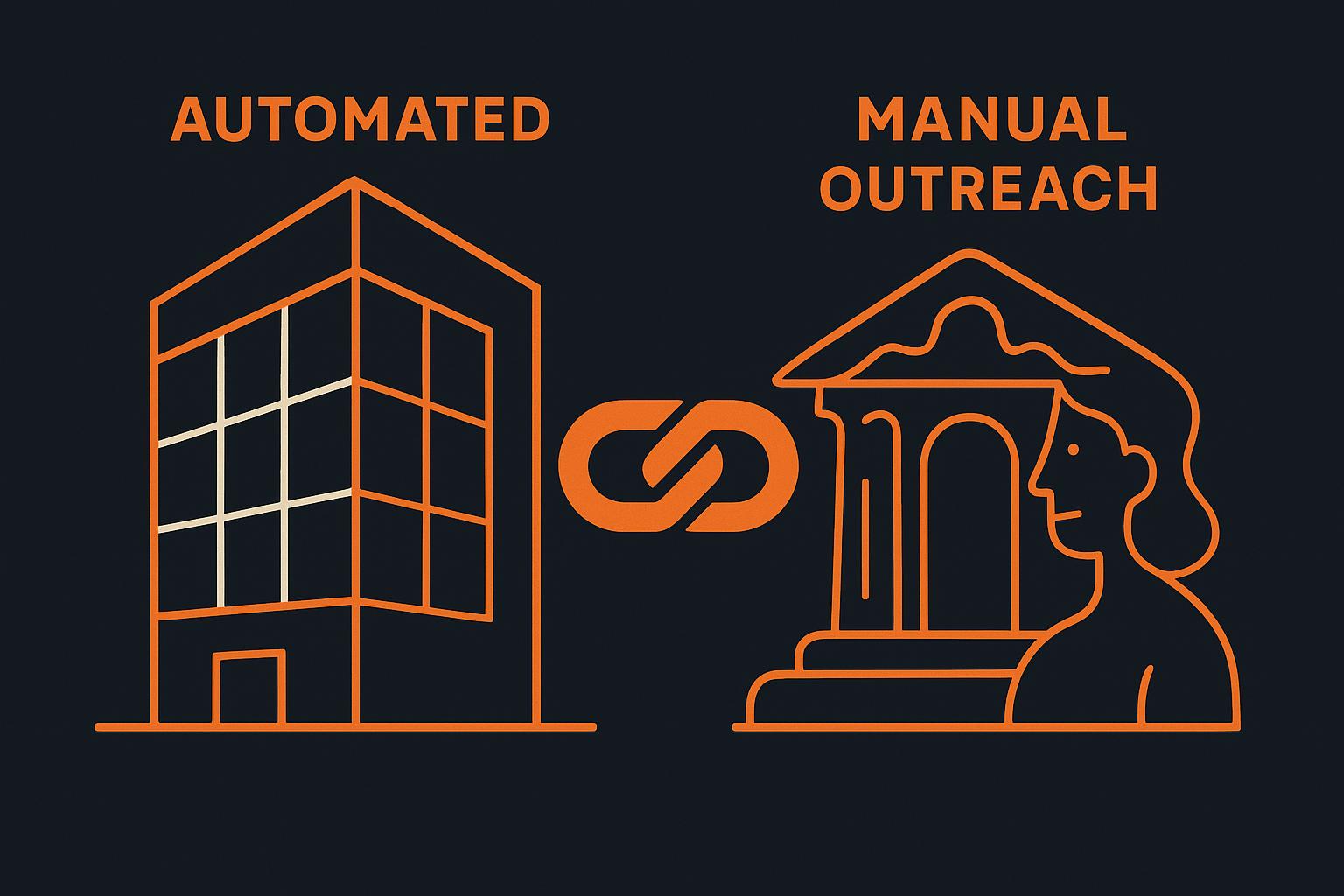
Both approaches have strengths and weaknesses, and the best choice depends on your goals, resources, and priorities.
- Automated Link Building: Faster and scalable. Tools like Linkzy handle prospecting, outreach, and tracking backlinks. Ideal for small businesses or those needing quick results on a budget. Risks include low personalization and potential compliance issues if quality isn't managed.
- Manual Outreach: Time-intensive but delivers high-quality, contextually relevant backlinks. Best for competitive industries or when targeting high-authority websites. Requires significant effort and expertise but builds stronger relationships and long-term SEO value.
Quick Comparison
| Factor | Automated Link Building | Manual Outreach |
|---|---|---|
| Speed | Fast (backlinks in 24–48 hours) | Slow (weeks to months) |
| Scalability | High (handles large volumes) | Limited (requires more resources) |
| Cost | Predictable (plans from $19/month) | Higher (tools, staff, or freelancers) |
| Personalization | Low (template-based emails) | High (custom pitches and follow-ups) |
| Link Quality | Depends on tool (e.g., Linkzy vets sites) | High (manually vetted opportunities) |
| Best Use Case | Moderate competition, budget-friendly | Competitive niches, high-value sites |
Conclusion: Use automation for efficiency and manual outreach for high-value opportunities. Combining both can balance speed, cost, and quality for a well-rounded SEO strategy.
Link Building Automation: Instantly Find Relevant Guest Posting Opportunities
How Automated Link Building Works
Automated link building relies on software and AI-driven tools to handle the repetitive tasks involved in acquiring backlinks. Instead of manually searching for link opportunities, crafting emails, and tracking responses, these platforms streamline the process with minimal human input.
The journey begins with prospecting. Automated tools scan thousands of websites in minutes, filtering them based on factors like domain authority, niche relevance, traffic, and content quality. This replaces the hours or even days it would take to manually compile a similar list. The software identifies potential targets such as blogs, news sites, and platforms that accept guest posts, sponsored content, or link placements.
Next comes outreach. Automation platforms create and send personalized email templates at scale, tailoring details like the recipient's website name and niche to make each message feel customized. Some tools also handle follow-ups, sending polite reminders if the initial email doesn’t get a response.
Finally, there’s link placement. Once a website agrees to host a backlink, the platform manages tasks like content submission, scheduling publication, and tracking live links. Many advanced tools include real-time dashboards to monitor backlinks, domain authority, and traffic metrics.
Take Linkzy, for example. This platform simplifies the entire process. By selecting your niche and integrating via API or WordPress, you can see backlinks appear on vetted, industry-specific blogs within 24–48 hours. Plus, real-time analytics make it easy to monitor performance without sifting through spreadsheets or manually checking links.
For businesses in the U.S., this means scaling your link-building efforts without the need for a dedicated outreach team or time-consuming manual work. These tools align with your market needs and deliver results efficiently.
This streamlined process not only speeds up outreach but also sets the stage for impactful results.
Benefits of Automated Link Building
One of the standout advantages of automation is speed and scalability. Tasks that might take weeks manually are completed in hours. Automation can target hundreds of sites at once, allowing businesses to grow their link-building efforts alongside other marketing strategies.
Another major benefit is cost savings. Platforms like Linkzy offer plans starting at $19 per month, with a Free Plan that includes three credits for testing the service without a financial commitment. This makes professional-grade link building accessible, even for businesses on a tight budget.
Ease of use is another key factor. With intuitive interfaces, these platforms simplify setup and operation. Linkzy, for instance, is compatible with any website platform - whether you use WordPress, Shopify, Wix, or a custom build - eliminating the need for specialized technical support.
When configured correctly, automated tools also deliver high-quality, niche-relevant backlinks. Linkzy carefully selects sites in its network to ensure they meet quality standards. Instead of relying on low-quality directories or inactive blogs, your site can gain links from credible platforms that boost its reputation with search engines.
Consistency is another often-overlooked benefit. Unlike manual outreach, which can be affected by workload or staff turnover, automated systems run continuously. This steady flow of links builds momentum for your SEO strategy, gradually improving rankings and organic traffic.
However, while automation offers clear advantages, it’s not without risks that need careful attention.
Risks of Automated Link Building
Despite its efficiency, the success of automated link building depends on maintaining quality and adhering to best practices.
One major risk is low-quality links. Not all automation platforms are equal - some prioritize quantity over quality, placing your links on irrelevant or spammy sites. Search engines are adept at spotting unnatural link patterns, and a poorly managed backlink profile can lead to penalties.
Another concern is violating Google’s guidelines. Practices like using generic emails or placing links on paid networks without proper disclosure can cross the line into manipulation, potentially resulting in ranking penalties or removal from search results.
Lack of personalization is another common issue. While automation can insert variables like names and URLs, it can’t replicate the authentic relationship-building that comes with manual outreach. Editors may quickly recognize mass-produced emails, reducing your success rate.
There’s also the risk of over-relying on automation. Without regular monitoring and adjustments, you may miss opportunities to refine your strategy. Automation should complement, not replace, a thoughtful and well-rounded SEO approach.
Platforms like Linkzy address many of these risks by focusing on vetted sites and offering transparent reporting. Detailed analytics show exactly where your backlinks are placed, along with metrics like domain authority and traffic estimates. This transparency helps you audit your backlink profile and make informed decisions.
By emphasizing niche alignment, Linkzy ensures that backlinks come from sites naturally connected to your industry. This approach creates a more organic link profile, reducing the risk of penalties and improving your site’s credibility.
While no tool is perfect, automated link building can be a powerful addition to your SEO strategy when paired with high-quality content, technical SEO, and ongoing performance analysis. It’s a tool to amplify your efforts - not a substitute for strategic thinking.
Manual Outreach: The Hands-On Method
Manual outreach is all about building backlinks through direct, personalized efforts. It’s a process that thrives on one-on-one conversations and human involvement at every stage - from identifying potential partners to securing those coveted placements.
The journey begins with research. Your team spends time exploring websites, blogs, and industry publications to uncover opportunities. Each prospect is evaluated carefully, considering factors like content quality, audience fit, and editorial standards. The goal? To find sites where your content truly adds value.
Once you’ve identified potential partners, the next step is crafting personalized pitches. These emails should demonstrate that you’ve done your homework. Mentioning a specific article or explaining how your content complements their work can make all the difference. This level of personalization takes time but is essential for success.
Where manual outreach really shines is in relationship building. This isn’t just about sending an email and hoping for the best. It could mean engaging with a site owner’s social media, leaving thoughtful comments on their blog, or even meeting them at industry events. The strongest backlinks often come from relationships nurtured over time, rather than quick, transactional exchanges.
Following up is another critical piece of the puzzle. If you don’t get a response right away, a well-timed follow-up can keep the conversation alive. Sometimes, tweaking your pitch or providing extra details can make all the difference in moving things forward.
Throughout the entire process, you’re keeping track of contacts, responses, and conversation progress - usually without much automation. Many teams rely on spreadsheets or CRM systems to stay organized, but managing these details manually can be a lot of work.
While manual outreach demands a significant time investment, it often results in a smaller number of high-quality backlinks. It’s a method best suited for businesses that place a premium on personalized, contextually relevant placements rather than sheer quantity. This approach emphasizes quality over volume.
Advantages of Manual Outreach
The personalized nature of manual outreach brings several benefits to the table.
One major advantage is the level of control it offers. You get to decide exactly where your links appear, what anchor text is used, and how your brand is represented. Because you carefully vet each opportunity, there’s less risk of your link ending up on an irrelevant or low-quality site.
Tailored pitches also ensure stronger relevance and context. By customizing your communication, you can suggest placements that naturally integrate with the target site’s content. This might mean creating custom guest posts or finding ways to enhance their existing material.
Building relationships through manual outreach creates long-term benefits. A site owner who trusts you is more likely to link to your content again in the future or even collaborate on other projects, making the effort worthwhile beyond just a single link.
Another plus is that manual outreach aligns well with search engine guidelines. By handling each interaction directly, you can ensure that your placements follow best practices, avoiding risks associated with automated methods.
Finally, personalized outreach often leads to better engagement. When someone sees that you’ve taken the time to craft a thoughtful message just for them, they’re more likely to respond. Plus, this approach gives you the flexibility to adapt if a site owner has specific preferences or requirements.
Challenges of Manual Outreach
Despite its benefits, manual outreach does come with its fair share of challenges.
The most obvious drawback is the time commitment. Building a solid backlink profile through personalized outreach can be a slow process. For small business owners juggling multiple responsibilities, dedicating the necessary hours might not be practical.
There’s also the cost factor. Hiring experienced professionals to handle manual outreach can be expensive, given the expertise and consistent effort needed. As your outreach efforts grow, scaling becomes tricky since more personalization usually means more human resources.
Another hurdle is the learning curve. Successful outreach requires strong writing skills, a solid understanding of SEO, and the ability to connect with new contacts. New team members may need time to get up to speed, and performance variations can impact overall results.
Low response rates are another challenge. Even the most carefully crafted outreach emails can go unanswered. Staying persistent is key, but not every attempt will yield immediate results.
The repetitive nature of manual outreach can also lead to burnout. Sending individualized emails and managing ongoing conversations over time can be mentally draining, which may affect motivation and consistency.
Lastly, there’s the opportunity cost to consider. The time spent on manual outreach could be used for other growth strategies like content creation or social media engagement.
Despite these obstacles, manual outreach remains a valuable tactic for businesses that focus on building meaningful, relationship-driven backlinks. Whether it’s the right fit for your business depends on your goals and the resources you have available.
sbb-itb-0f47b19
Automated vs Manual: Direct Comparison
Building on the methods we’ve already discussed, let’s dive into a direct comparison of automated link building and manual outreach. Understanding how they stack up against each other across key factors can help you decide which approach fits your SEO strategy.
Efficiency and Time Investment
Manual outreach is a time-intensive process. It involves detailed research, crafting personalized pitches, sending follow-ups, and fostering relationships - all of which can stretch out the timeline for securing quality backlinks.
On the other hand, automated link building simplifies and speeds up the process. With tools like Linkzy, businesses can bypass the lengthy setup and execution phases, gaining backlinks much faster. This allows companies to focus on building authority without the delays that often accompany manual outreach.
Scalability and Volume
Scaling manual outreach is no small feat. Since it relies on personalized efforts, expanding your efforts often means hiring more staff or increasing resources, which can slow down growth and limit the number of quality backlinks you can secure.
Automated link building, especially with Linkzy, is designed for scalability. Whether you need a handful of backlinks or a larger volume, the process remains efficient and consistent. Linkzy’s credit-based plans make it easy to adjust your strategy as your needs evolve, without requiring extra staff or significant time investments.
Cost and Resource Allocation
Manual outreach can quickly become costly. Beyond the time it takes, you’ll likely need to invest in tools for prospecting and relationship management, as well as dedicated personnel to handle the workload. These expenses can add up, especially for smaller businesses.
Automated link building offers a more predictable and transparent pricing structure. Linkzy’s credit-based plans allow businesses, including startups, to allocate their budgets more effectively. This makes it easier to plan for link-building expenses without unexpected costs.
Link Quality and Relevance
The quality of backlinks is a critical factor in any link-building strategy. Manual outreach gives you the chance to personally evaluate potential sites, ensuring they’re relevant and authoritative. However, this hands-on approach can be time-consuming and may limit the number of high-quality links you can secure.
Linkzy addresses this challenge by focusing on niche-specific targeting and working with a network of pre-vetted, real blogs. This ensures the backlinks you receive are not only high-quality but also contextually relevant, aligning with natural link patterns. While manual outreach offers a high level of customization, Linkzy provides a reliable, scalable solution for acquiring effective backlinks.
Risk and Compliance
Both methods need to follow Google’s guidelines, which emphasize natural link-building practices. Poor execution - whether through overly aggressive tactics or template-heavy approaches - can lead to compliance risks.
Linkzy helps mitigate these risks by partnering exclusively with vetted, real blogs and focusing on niche relevance. This approach aligns with organic link-building best practices, reducing the chances of penalties. Automated processes also minimize human error, offering a more consistent and compliant solution.
This breakdown highlights the strengths and challenges of each approach, helping you weigh your options and choose the strategy that best aligns with your business goals.
Choosing the Right Approach for Your Business
To find the best link-building strategy for your business, consider factors like your company's size, available resources, timeline, and SEO goals. Here's a breakdown to help you decide.
When to Choose Automated Link Building
Automated link building is ideal when you need speed, reliability, and predictable costs without compromising quality. This approach works particularly well for small to mid-sized businesses that don’t have the bandwidth to manage extensive outreach campaigns.
For startups or small businesses with limited staff, automation provides quick, cost-effective results. Competing with more established businesses becomes easier when you can secure backlinks efficiently.
If you're managing multiple websites or clients, automated systems save significant time. Instead of juggling numerous outreach campaigns, automation simplifies the process, ensuring steady link-building progress across all your projects.
This method also works well in moderately competitive industries, where high-quality backlinks are important, but extreme customization isn’t necessary. For instance, an e-commerce site selling outdoor gear or a local service business like HVAC repair can benefit from automation to secure relevant links without having to negotiate with every publisher.
Another advantage? Budget control. Tools like Linkzy use a credit-based system, so you always know your monthly expenses. This eliminates surprise costs, such as paying freelancers or investing in tools that might not deliver results.
That said, if your goals require a highly personalized approach, manual outreach may be a better fit.
When to Opt for Manual Outreach
Manual outreach is the go-to strategy when building strong relationships and crafting tailored pitches is crucial. This approach is particularly effective when targeting high-authority publications that demand a personal touch.
If you're operating in a highly competitive or specialized niche - like legal services, financial consulting, or enterprise SaaS - you may need placements on top-tier websites. These often require nurturing relationships with editors and publishers over time, something automation can't replicate.
Companies with complex or unique stories also benefit from manual outreach. For example, if you're launching a groundbreaking product, sharing proprietary research, or positioning your leadership team as experts, custom pitches enable you to convey the nuance and context that automated systems might miss.
Already have existing industry connections? Personalized outreach can help you build on those relationships, often converting at much higher rates than cold pitches.
Lastly, manual outreach is well-suited for businesses with the resources and patience for a long-term strategy. Securing a guest post on a respected industry site or being featured on a prominent blog often requires multiple touchpoints, follow-ups, and relationship-building over weeks or months.
Combining Both Approaches
Why choose one method when you can combine the strengths of both? A hybrid approach allows you to maximize the benefits of automation and manual outreach while minimizing their limitations.
Automated link building, such as through Linkzy, can serve as your base strategy, ensuring consistent backlink growth month after month. This frees up your time and resources for manual outreach, which can focus on high-value opportunities that require personal attention.
For example, automation can handle the steady flow of backlinks, ensuring your SEO progress remains on track. Meanwhile, you can dedicate time to reaching out to top-tier publications for guest posts or features. This way, you achieve both volume and premium quality.
A hybrid strategy is especially effective when you're scaling your business. Start with automated link building to quickly establish your authority. As your business grows and you have more resources, layer in manual outreach to target high-authority sites that can drive your growth even further.
Another option is to use automation for ongoing maintenance while reserving manual efforts for specific campaigns. Whether you're launching a new product, running a seasonal promotion, or entering a new market, you can temporarily focus on manual outreach while automation handles your routine link-building tasks.
The key takeaway? These methods work best together. By balancing your budget and time - investing in automated systems for consistent results while dedicating focused manual efforts to priority opportunities - you can create a comprehensive link-building strategy that delivers both steady growth and standout results.
Conclusion
There isn’t a one-size-fits-all solution when it comes to link building - it all depends on your goals, budget, resources, and niche. Both manual outreach and automated link building offer unique benefits, and knowing when to use one, the other, or a mix of both is key to crafting a successful SEO strategy.
Manual outreach is ideal for building high-quality, compliant links that deliver long-term SEO value [3]. This approach is especially effective in competitive markets, such as B2B or e-commerce, where relevance and quality can set you apart [1]. However, it’s worth noting that this method requires a significant time commitment.
On the other hand, automated link building shines when speed, scalability, and cost efficiency are priorities. As your website grows and demands more extensive keyword targeting or a higher volume of links, automation becomes increasingly valuable [2]. While traditional methods often result in fewer than 10 links per month for 73% of marketers, automation can significantly boost output [2].
For businesses in the U.S. aiming to strike the right balance, tools like Linkzy offer a practical solution. Linkzy provides high-quality, niche-relevant backlinks through an automated system, ensuring efficiency without compromising on standards. With transparent pricing starting at $19 per month, backlinks delivered within 24–48 hours, and real-time analytics, it combines the speed of automation with dependable results.
Interestingly, as of 2024, 86% of SEO professionals are incorporating AI into their workflows [2]. Businesses that embrace intelligent automation are reaping the rewards, and many successful strategies blend automation with manual efforts. Automation can handle the foundational work, while manual outreach is reserved for high-value opportunities that require a personal touch [2][3].
Ultimately, the best results come from integrating both methods. By combining automation’s efficiency with the precision of manual efforts, you can create a flexible and effective SEO strategy tailored to your current needs and long-term goals.
FAQs
When should businesses choose automated link building over manual outreach for their SEO strategy?
Deciding between automated link building and manual outreach comes down to what your business needs and priorities are. If your aim is to secure high-quality backlinks, build real relationships, and connect with niche audiences, manual outreach is often the way to go. On the flip side, if scaling quickly, cutting costs, and targeting less competitive keywords are your main goals, automated link building might be the better fit.
Your time and budget also play a big role in this decision. Manual outreach takes more effort and resources but delivers highly tailored results. Automated tools, meanwhile, focus on efficiency and scalability, making them a great option for businesses with tighter budgets or those looking for quicker outcomes. Striking the right balance between these two methods can help you get the most out of your SEO strategy.
What are the risks of automated link building, and how can you avoid them?
Automated link building comes with its share of challenges. Among the biggest risks are penalties from search engines, links coming from irrelevant or low-quality websites, and anchor text that feels over-optimized or unnatural. These problems can seriously damage both your site's SEO performance and its reputation.
To steer clear of these pitfalls, concentrate on using trusted tools that emphasize quality rather than sheer volume. Make sure the links you acquire are relevant to your industry or niche, and aim for a diverse, natural mix of anchor text. Additionally, keeping a close eye on your backlink profile can help you spot and fix any harmful links before they cause bigger issues.
Can businesses benefit from combining automated link building with manual outreach, and how can they strike the right balance?
Yes, blending manual outreach with automated link building can be a game-changer when approached the right way. Manual outreach excels at creating meaningful, high-quality backlinks by adding a personal touch and ensuring relevance. Meanwhile, automation is perfect for streamlining repetitive tasks, saving time, and scaling your efforts.
The key is finding the right balance. Use automation for tasks like identifying potential link prospects or managing follow-up reminders. Then, rely on manual outreach to craft personalized pitches and foster genuine relationships. By aligning your approach with your specific goals and industry, you can achieve the best of both worlds.