10 Ways to Get Quality Backlinks Without Outreach
10 Ways to Get Quality Backlinks Without Outreach
Building quality backlinks doesn’t have to mean endless cold emails and follow-ups. Instead, you can focus on strategies that naturally attract links by creating value-driven content and leveraging tools that simplify the process. Here’s a quick summary of 10 effective ways to earn backlinks without outreach:
- Linkzy: An automated platform that places niche-specific backlinks for you.
- Evergreen Content: Publish timeless articles that attract backlinks over time.
- AI Visualizations: Use AI tools to create shareable charts and infographics.
- Content Syndication: Republish your content on high-authority platforms.
- Free Tools/Calculators: Develop resources that solve specific problems for your audience.
- Original Research/Case Studies: Share unique data or insights that others want to reference.
- Internal Linking: Strengthen your site’s structure to boost SEO and link flow.
- Online Communities: Engage in forums like Reddit or Quora to earn organic backlinks.
- Linkable Formats: Create content like guides, templates, or data studies that others naturally cite.
- User-Generated Content: Encourage reviews, testimonials, or community contributions to generate backlinks.
These strategies work best when combined, helping you build a strong backlink profile while saving time and effort. Let’s break down each approach in detail.
Reverse Outreach | How to Get Backlinks Without Outreaching?
1. Linkzy
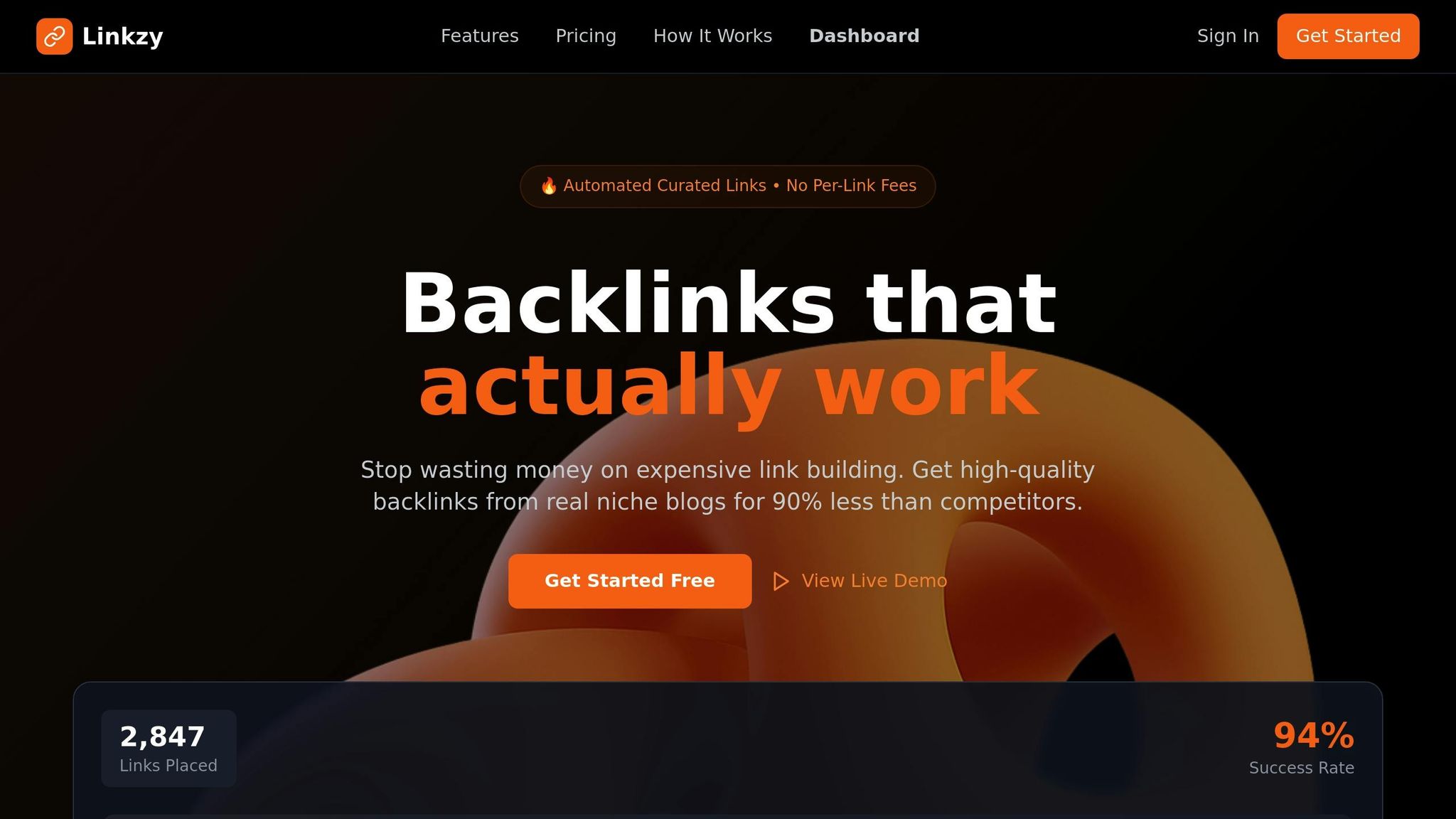
Linkzy is an automated platform designed to simplify backlink building. Instead of spending hours hunting for link prospects, writing personalized outreach emails, and chasing responses, you can launch a campaign in minutes and start seeing results in as little as 24–48 hours.
The system places your backlinks on real blogs that match your niche. During setup, you choose your industry, connect your site through their API or WordPress plugin, and let the platform handle the rest. Each backlink is placed within content that aligns with your site’s focus - exactly the kind of links search engines prefer.
What makes Linkzy stand out is its flexibility. Whether you’re running a WordPress blog, a Shopify store, or a custom-built site, the integration process is straightforward. Plus, the platform provides real-time analytics so you can track metrics like domain authority and referral traffic with ease.
Let’s break down the key features that make Linkzy a game-changer: automation, niche-specific targeting, flexible pricing, and minimal upkeep.
Automation at Its Best
Once you’ve completed the initial setup, Linkzy takes over. The platform continuously identifies blogs and content opportunities in your niche, ensuring your backlink profile grows while you focus on other aspects of your SEO strategy. It’s a set-it-and-forget-it approach to link building.
Targeted Niche Relevance
One of Linkzy’s core strengths is its focus on niche relevance. You select your industry - whether it’s SaaS, e-commerce, health, finance, or something else - and the platform matches your site with blogs and content that fit your space. This targeted approach boosts your SEO by ensuring backlinks are contextually meaningful.
Flexible Pricing Options
Linkzy offers three pricing tiers to suit different needs:
- Free: Includes 3 credits
- Starter Plan: $19/month for 5 credits
- Pro Plan: $29/month for 15 credits
Each credit equals one high-quality backlink placement. Plans renew automatically but can be canceled anytime, giving you control over your budget.
Minimal Effort Required
Getting started is simple. After setting up your account and integrating your site, Linkzy runs with little ongoing effort. You can track your backlinks and performance through a real-time dashboard without needing to manage campaigns daily. It’s an ideal solution for solo entrepreneurs or small teams looking to save time.
2. Create Long-Lasting Content
Evergreen content has a unique advantage - it keeps attracting backlinks over time without constant effort. By publishing articles, guides, or resources that stay relevant for years, you position your site as a go-to reference. Other websites naturally link back to such content because it remains useful and trustworthy. The key is to focus on enduring topics rather than fleeting trends. Let’s explore how to create content that stands the test of time.
To make your content truly enduring, aim for thorough and original material. Surface-level articles rarely attract significant attention or links. Instead, craft in-depth resources that address every possible question someone might have about the subject. When your content becomes the definitive source in your field, it naturally earns links from others covering related topics.
Relevance to Your Niche
For evergreen content to succeed, it must align closely with your industry and audience. For example, a financial services website publishing a detailed guide on "Understanding Compound Interest" is likely to attract backlinks from personal finance blogs, investment platforms, and educational sites. On the other hand, if the same site publishes generic lifestyle content, it won’t generate the same level of interest or credibility.
Stick to topics where you have real expertise. If you run an e-commerce store specializing in outdoor gear, focus on creating guides about camping techniques, gear maintenance, or choosing the right hiking trails. These kinds of resources are valuable to outdoor bloggers, local tourism websites, and forums where enthusiasts share tips and recommendations.
Specificity is just as important. Instead of writing something broad like "A Guide to Digital Marketing", narrow it down to "Email Marketing Automation for SaaS Companies" if that aligns with your expertise. Targeted content tends to attract more relevant backlinks from authoritative sites in your niche, amplifying its value for your SEO efforts.
Building Scalable Content
The beauty of evergreen content is its ability to grow in value over time. Once published, it continues to attract backlinks as long as it remains relevant. When your content is both focused and comprehensive, its impact scales with every new link it earns.
You can amplify this effect by creating a collection of cornerstone content. Start with five to ten detailed guides that cover the most critical topics in your field. As these resources gain traction, they’ll boost your site’s reputation as an industry authority. Over time, the compounding effect of multiple high-quality resources can significantly enhance your SEO performance.
The Effort Pays Off
Creating evergreen content isn’t a quick task - it requires a serious time investment upfront. Expect to spend 20–40 hours on research, writing, and polishing for each major piece. But the rewards are worth it. Once published, these resources work for you passively. You won’t need to send outreach emails or negotiate link placements; the backlinks will come naturally as others discover and reference your work.
Invest time in thorough research and quality writing. Half-hearted or shallow content won’t earn links, no matter how evergreen the topic. Treat each piece as a long-term asset. To keep your content relevant, revisit it annually. Update statistics, refresh examples, and incorporate any recent developments in your industry. These small updates ensure your content remains valuable and continues to attract new backlinks as time goes on.
3. Use AI-Generated Data Visualizations
AI-generated visualizations make complex data easier to understand and share, naturally drawing backlinks. When you create charts, graphs, or infographics that showcase valuable insights, other websites are more likely to reference and link to them. Thanks to AI tools, you no longer need advanced design skills to produce high-quality visual content. These tools simplify the process, as explained below.
Automation Potential
AI visualization tools take care of the design and formatting for you. All you need to do is input your data and specify the key points you want to emphasize. The AI then generates polished, publication-ready visuals. Many of these platforms also provide templates tailored to specific data types, whether you're working with survey results, industry benchmarks, or performance metrics.
What’s even better? Some AI tools can automatically update visualizations when your data changes. This feature is especially useful for recurring reports or dashboards. Instead of recreating charts every month or quarter, the AI updates them with fresh figures. This ensures your content remains current and accurate, continuously attracting backlinks without requiring extra manual effort.
Relevance to Your Industry
The most effective visualizations are those that resonate with your industry. Broad, generic statistics often fail to gain traction, but industry-specific visual insights can become highly shareable resources. For example, if you’re in the real estate market, visualizations showing local housing price trends, mortgage rate comparisons, or rental yield analyses can attract links from real estate blogs, local news outlets, and investment forums.
Using original data is even more impactful. If you conduct surveys, compile benchmarks, or analyze proprietary information, visualizing those findings makes them more appealing and shareable. Even with publicly available data, you can stand out by presenting it in a fresh way - combining multiple sources, focusing on a niche angle, or updating outdated graphics can turn ordinary data into a valuable resource that earns backlinks.
Scalability
AI visualizations also offer scalability, making it easier to expand your link-building efforts. Once you’ve mastered the tools, you can create a series of visuals that cover various aspects of your industry. Each visualization can stand on its own while contributing to a larger narrative.
You can also repurpose your data into multiple formats. For instance, a single survey could yield several unique charts, each highlighting a different insight. This approach maximizes the value of your data collection efforts, giving you multiple opportunities to attract backlinks.
Another strategy is to establish a regular schedule for releasing updated visualizations. Monthly or quarterly reports can position your site as a go-to source for up-to-date information. Over time, as readers come to rely on your consistent updates, they’ll proactively link to your new releases, creating a snowball effect of growing attention and backlinks.
Effort Required
Getting started involves choosing the right AI tools and learning how to use them. Most platforms are user-friendly and don’t require coding or advanced design skills, so the learning curve is manageable.
Creating a visualization can take anywhere from 15 minutes to two hours, depending on the complexity of the data and design. Simple charts with clean data are quick to produce, while more intricate visuals that combine multiple data sources or require custom formatting take longer. Even so, this process is far quicker than manual design, which could take an entire day for similar results.
Once your workflow is set up, most of your time will go toward gathering and analyzing data rather than designing visuals. With the AI handling the presentation, you can focus on strategic decisions - like which insights to highlight and how to present them effectively.
As for costs, many AI visualization tools offer free plans for light use, while professional subscriptions typically range from $15 to $50 per month. This is a small investment compared to the potential payoff, as quality visualizations can attract backlinks that would otherwise require significant outreach or paid link-building efforts.
4. Use Content Syndication Platforms
Content syndication is a powerful way to expand your audience and gain quality backlinks without the hassle of constant outreach. By redistributing your articles on well-established, high-traffic websites, you increase exposure while maintaining SEO value through canonical links that point back to your original content.
Here’s how it works: when you syndicate your content, it appears on reputable sites with strong domain authority. These platforms usually include a canonical link or proper attribution to your original article, ensuring your SEO benefits remain intact. Unlike guest posting, which involves pitching ideas and waiting for approvals, syndication platforms streamline the process. You simply submit your content, and if it meets the platform's guidelines, it gets published - complete with a backlink to your site. This makes syndication an efficient way to build links with minimal daily effort.
Automation Potential
Many syndication platforms offer automated workflows to make the process even easier. These tools can distribute your content across their networks with little manual intervention. Some platforms even allow you to schedule syndication to ensure your original post is indexed by search engines first, protecting its visibility.
For even more convenience, some services provide API integrations that connect directly to your content management system. This setup allows your content to be automatically syndicated whenever you publish on your site, based on the rules you define. It’s a hands-off approach that saves time while maximizing reach.
Relevance to Your Industry
Selecting the right syndication platforms is key to success. Focus on platforms that cater to your specific industry or niche. For instance, if you’ve written an article about cybersecurity, publishing it on a tech-centric site will likely generate more relevant backlinks than posting it on a general news aggregator.
By targeting niche platforms where your audience is already active, you increase the chances of engaging the right readers and earning backlinks that truly matter. The closer the platform’s focus aligns with your content, the better the results.
Scalability
One of the greatest advantages of content syndication is its scalability. It enables you to extend the reach of your articles across multiple platforms, amplifying the impact of content you’ve already created. You can start small - syndicating on just a few platforms - and gradually expand as you refine your strategy.
Additionally, many syndication platforms allow you to republish older articles. This gives your existing content a second life, helping you generate fresh backlinks and traffic without the need to create new material.
Effort Required
Getting started with content syndication is straightforward. Setting up accounts on syndication platforms typically takes just a few minutes per platform, and submitting your articles is usually a simple process.
The amount of ongoing effort depends on how many platforms you use and whether you incorporate automation tools like RSS feeds or API integrations. To optimize your efforts, monitor which platforms drive the most traffic and backlinks. This way, you can focus on the channels that deliver the best results, ensuring your syndication strategy remains both effective and efficient.
5. Offer Free Tools or Calculators
Offering free tools or calculators is a smart way to naturally attract backlinks while solving real problems for your audience. These resources often act as "link magnets", drawing mentions from blogs, articles, and even video descriptions. For example, a mortgage calculator could be linked by real estate blogs, financial planning guides, or YouTube creators. Over time, as more people discover and share your tool, the backlinks keep adding up.
To maximize their SEO impact, host your tools on dedicated URLs. This setup allows others to link directly to the tool, making it easier for search engines (and AI systems) to index and understand your resource. For instance, a URL like "yoursite.com/roi-calculator" gives your tool its own identity, helping it rank independently and attract targeted traffic. Think of it as creating a mini-product that stands on its own.
Relevance to Your Audience
The best tools are those that connect directly to your industry and audience's needs. If you're in financial services, tools like a retirement savings calculator or debt payoff planner make sense. A marketing agency might create an SEO audit tool or a social media ROI calculator.
Self Financial, for example, published a page based on a survey of over 1,000 Americans, focusing on side hustles, demographics, and earnings. This page has earned 88 organic backlinks from 67 domains [2].
The success of this tool came from its relevance to Self Financial's audience - people interested in personal finance and additional income opportunities.
Another example is Self Inc.'s resource tracking U.S. National Debt by President. Using data from the U.S. Treasury and historical events like wars and COVID-19, the tool has attracted 542 backlinks from 215 domains since its launch in 2020 [2].
This approach worked because it provided reliable, unique data that journalists, educators, and analysts could reference in their own work.
A Passive Link-Building Machine
Once your tool is live, it can work for you around the clock. Tools like these attract backlinks passively, without requiring constant outreach or promotion. They’re always available, ready to be discovered and shared by users and even recommended by AI systems. This passive nature makes them a scalable and efficient way to build authority.
Expandable and Scalable
What’s great about free tools is how well they scale. A single resource can earn links from blogs, Reddit threads, YouTube videos, and industry reports - all from the same initial effort. Over time, you can expand your library of tools. Start with one that addresses your audience's most pressing need, then add more as resources allow. Each new tool becomes another opportunity to attract links, multiplying your efforts without significantly increasing your workload.
The Work Involved
Creating these tools does require upfront effort. You’ll need to design a user-friendly interface, ensure the functionality works flawlessly, and test it across devices. If your tool relies on original data or research, the initial build might take even longer.
However, the effort pays off in the long run. Take Self Inc.'s national debt tracker - it’s been updated multiple times since 2020 to keep it accurate and relevant [2]. Regular updates ensure your tools stay useful and continue to drive backlinks. While the initial investment may seem significant, the ongoing maintenance is manageable, and the benefits accumulate over time.
sbb-itb-0f47b19
6. Publish Original Research or Case Studies
Publishing original research or case studies can establish your website as a trusted source in your industry. When you share data-driven content that isn’t available elsewhere, it naturally catches the attention of journalists, bloggers, and industry experts. They’ll reference and link to your work because it provides the credible, original insights they need. This type of content generates valuable backlinks without requiring extensive outreach.
The secret lies in uncovering something new or challenging established ideas. This could involve surveying your customers, analyzing your own industry data, or detailing a case study based on your work. When your findings become go-to resources, they naturally attract citations and links over time. By creating content that offers unique insights, you’ll position your research to meet specific industry demands.
Relevance to Niche
Your research needs to tackle questions that matter to your industry. Broad, generic studies rarely gain traction - specificity is what drives engagement. For example, an e-commerce business could analyze cart abandonment rates across various product categories. A SaaS company might dive into customer retention trends based on different onboarding approaches.
The best research ties directly into the ongoing conversations within your field. Consider what data you have that others don’t. Your customer feedback, internal metrics, or operational insights could form the backbone of research that competitors can’t easily replicate. This exclusive perspective makes your content more likely to earn backlinks.
Effort Required
Creating original research requires a significant initial investment. You’ll need to design a methodology, gather and verify data, and present your findings in a clear and engaging way. This process can take weeks or even months to complete.
Case studies, while less data-intensive, still demand a strong narrative. You’ll need to document your processes, track results over time, and often collaborate with clients or team members to collect testimonials and metrics. The writing itself is crucial - you’re not just sharing numbers but crafting a story that highlights real-world outcomes.
The good news? This effort produces a long-lasting asset that remains valuable for years. You can repurpose your findings into various formats, such as blog posts, infographics, presentations, or social media content. Each format opens up new opportunities for engagement and backlinks.
Scalability
Original research offers scalability that other link-building strategies often lack. A single, well-done study can continue generating backlinks for months, even years, with minimal ongoing effort. Instead of churning out new content constantly, you can focus on promoting and occasionally updating your research.
You can also create a research calendar, releasing studies on a quarterly or annual basis. Over time, this positions your brand as a reliable source of data. Media outlets and industry professionals may even start reaching out for early access or commentary. This consistent approach builds momentum, making it easier to attract attention with each new release.
To make future research projects more efficient, invest in systems for data collection and analysis. For instance, if you’re conducting customer surveys, develop templates and processes to streamline the work. If you’re analyzing internal data, set up dashboards to simplify extracting insights. By building these systems, you can reduce effort while maintaining the quality of your research.
7. Build Internal Linking Networks
Internal linking is more than just a way to help users navigate your site - it’s a powerful SEO tool. By distributing page authority and reinforcing topical relevance, a well-thought-out internal linking strategy can improve how search engines and users understand your website. It also makes your content more accessible, shaping the way your site communicates with your target audience.
Aligning Links with Your Niche
Your internal links should reflect the main themes of your industry. A smart way to approach this is by developing pillar pages that cover broad topics and linking them to cluster articles that dive into specific subtopics. For example, a pillar page about email marketing could link to cluster articles on topics like crafting subject lines or optimizing open rates. These articles should also link back to the pillar page and to each other when relevant. This interconnected structure builds topical authority and strengthens the contextual value of your links [4].
When adding links, don’t overlook the importance of anchor text. Descriptive, keyword-rich anchor text is far more effective than vague phrases like “click here” or “read more.” The surrounding text should also provide context, making the link more meaningful for both readers and search engines [3][4].
Streamlining with Automation
Automation tools like LinkWhisper can simplify the process of finding and adding internal links. They help identify relevant opportunities in seconds, saving you hours of manual effort [4]. Tools like Google Search Console can also show which internal links are driving the most traffic, helping you refine your strategy. To ensure no page is left behind, use tools like Screaming Frog to locate orphaned pages and make sure they’re properly linked [4].
Scaling Your Strategy
The beauty of a strong internal linking framework is its scalability. As you publish new articles, you can easily link them to existing content, reinforcing your site’s structure with minimal effort. The pillar-cluster model is especially effective here - it gives you a ready-made system for deciding where new content fits and how it connects to related topics. Over time, this approach can significantly boost your organic traffic [4].
The Time Investment
Building a solid internal linking network takes some upfront work. You’ll need to audit your existing content, pinpoint key pages, and map out a strategy that ties related topics together. For larger websites, this process can take several days. However, once your system is in place, maintaining it becomes much easier. Adding internal links to new articles typically takes just 15–30 minutes. This ongoing effort pays off by improving your site’s crawlability, user experience, and overall SEO performance [4].
8. Participate in Online Communities and Forums
While automated tools and content strategies can be powerful, nothing beats the personal touch of engaging in online communities and forums. These platforms not only help you build your reputation but also offer a natural way to earn backlinks. By sharing your expertise and solving problems, you can attract backlinks that are both organic and contextually relevant. The key here? Genuine interaction. Instead of just dropping links, focus on providing value in every conversation. Take the time to understand the community norms so your contributions are meaningful and well-received.
Start by figuring out where your audience already spends their time. Reddit, for example, has thousands of niche subreddits, while Quora is a go-to for people seeking answers. Industry-specific forums like WebmasterWorld for SEO professionals or Stack Overflow for developers are excellent places to connect with a concentrated audience. Don’t overlook Facebook groups or LinkedIn communities either - they can be goldmines for engagement. Just remember, every platform has its own culture and rules, especially around sharing links. Some forums may restrict self-promotion or require you to build trust before posting links. Establishing credibility through thoughtful answers and insights is the best way to navigate these spaces.
Relevance to Your Niche
Stick to communities that align closely with your niche. For example, if you run a SaaS analytics platform, you’ll find the best opportunities in communities focused on data visualization, product metrics, or business intelligence. Similarly, a fitness blog would gain more traction in health forums, workout-related subreddits, or nutrition discussion groups. Engaging in these niche-specific spaces not only helps you build backlinks but also boosts your brand visibility and positions you as a trusted resource in your field.
Consistent Effort Matters
Building credibility in online communities takes time and regular effort. Consistency is key. Early on, it’s a good idea to focus on just a few key communities where you can make the most impact. Once you’ve established a strong presence, your contributions will naturally carry more weight, and your efforts will begin to pay off in the form of stronger relationships and better backlinks.
Scaling Your Engagement
Unlike automated strategies, participating in forums and communities requires a hands-on approach. To make the most of your efforts, focus on a small number of high-impact platforms. If your team is involved, ensure they understand your content and can contribute thoughtfully, avoiding any hint of overt promotion. This targeted approach ensures that your participation remains authentic and continues to deliver quality backlinks while fostering genuine connections within the community.
9. Optimize for Linkable Content Formats
Not all content is naturally designed to attract backlinks. Formats that provide unique data, practical tools, or easy-to-cite information tend to earn links organically because they offer genuine value to other creators. When your content serves as a reliable reference, offers solutions, or presents original insights, it becomes a go-to resource for journalists, bloggers, and researchers looking to support their work.
The most linkable content is easy to cite and reference. People need credible sources to back up their arguments, share data, or recommend tools. If your content meets these needs, backlinks will often come without the need for extensive outreach [2].
In today's digital landscape, AI and social media platforms also prioritize content with strong contextual authority. Your content needs to be accessible and citable across various platforms - not just Google, but also AI tools, forums, and social media [1][5]. Linkable formats complement other SEO strategies by making your content discoverable and shareable in multiple contexts.
Relevance to Your Niche
Building on strategies like evergreen content and free tools, focusing on linkable formats strengthens your SEO efforts. While the most effective formats can vary by industry, certain types consistently perform well across niches.
- Original research and data studies: These are highly sought-after because they provide exclusive information. By publishing survey findings, industry benchmarks, or proprietary data, you position your content as the primary source others need to cite.
- Interactive tools and calculators: Particularly useful for technical or financial topics, these provide immediate value and naturally attract links. Hosting them on dedicated URLs makes it easy for others to link directly.
- Comprehensive guides and templates: Detailed resources that solve specific problems, like a marketing report template or a user research framework, tend to be referenced repeatedly.
- Data visualizations and infographics: These simplify complex information, making it more digestible and shareable, which often leads to more backlinks.
Beyond choosing the right format, automation can help you scale these efforts effectively.
Automation Potential
While creating linkable content requires careful planning, certain processes can be streamlined. Tools like analytics platforms and APIs can simplify data collection and analysis, while AI-powered design tools can quickly transform raw data into polished visuals like charts or infographics.
Automation also aids distribution. Features like schema markup, RSS feeds, and content syndication ensure your assets remain visible and accessible across platforms. These tools can help extend the reach of your content without requiring constant manual effort.
Effort Required
Producing linkable content takes more upfront work than a standard blog post. For example, original research involves collecting, analyzing, and presenting data, while functional tools require development resources and ongoing updates. Similarly, creating comprehensive guides demands expertise and careful organization.
However, this effort pays off in the long run. Unlike traditional content that peaks in visibility shortly after publication, linkable assets can continue earning backlinks for months - or even years. To maximize their impact, ensure your content is structured logically, uses clear headings, and has simple URLs. When someone wants to link to your work, they should be able to do so effortlessly.
Scalability
Linkable content builds authority over time. Each piece you create has the potential to generate backlinks indefinitely, strengthening your domain authority. Unlike outreach campaigns that require constant effort, a well-maintained library of linkable assets works for you around the clock.
Start by identifying which formats resonate most with your audience. If data studies perform well, consider publishing them quarterly. If tools attract links, develop a series of related calculators. The key is to become a trusted source of valuable resources in your field.
As AI-driven search continues to grow, content with third-party credibility becomes even more critical. Links from trusted websites not only boost traditional SEO metrics but also enhance the contextual authority that AI systems use to evaluate sources [5]. This makes linkable content formats an essential part of adapting to the evolving search landscape.
10. Encourage User-Generated Content
User-generated content (UGC) transforms passive users into active participants, naturally driving backlinks through reviews, testimonials, case studies, and community discussions. What makes this approach effective is that it draws from real user experiences rather than crafted marketing messages.
The strength of UGC lies in its authenticity and reach. While a single piece of content you create might earn a few backlinks, user contributions can multiply that impact. When community members share their success stories, create tutorials using your tools, or highlight their results, they often link back to your site as the source.
Platforms like forums, review sites, and social media are hotspots for these organic backlinks. For example, if someone on Reddit mentions your budgeting calculator as a game-changer, that’s a backlink opportunity created entirely by your audience.
Tailoring UGC to Your Industry
The kind of user-generated content that generates backlinks depends heavily on your niche. For example:
- Software and SaaS companies see users creating tutorials, integration guides, or use case write-ups.
- Educational platforms benefit from students and instructors sharing course outcomes or learning tips.
- E-commerce sites gain backlinks from unboxing videos, product reviews, and comparison posts.
UGC complements your own content by reaching beyond what you can produce alone. While you might release a comprehensive guide, your users can create dozens of unique applications or perspectives, each appealing to a different audience. This variety draws in links from a broader range of sources.
To encourage contributions, make it simple and rewarding for users to participate. Dedicated spaces like forums, review sections, or user galleries invite users to share. When people see their input valued and showcased, they’re more likely to invest time in creating detailed, link-worthy content. This engagement builds the foundation for long-term, scalable growth.
Automating the Process
Though genuine contributions can’t be automated, the systems supporting them can. For example:
- Automated moderation tools help maintain quality without requiring constant oversight.
- Email triggers can thank users for submissions and notify them when their content is live, encouraging repeat participation.
- Social proof widgets display recent reviews or testimonials, keeping your site fresh and motivating others to contribute.
You can also set up alerts to track when users mention your brand or link to your content, helping you measure the backlink impact of UGC. These systems work in the background, creating a self-sustaining cycle of content creation and link generation.
Balancing Effort and Rewards
Getting started with UGC requires a moderate upfront investment. You’ll need clear submission guidelines, user-friendly contribution tools, and moderation systems to ensure quality. Building trust takes time - users need to see the value in contributing.
However, as your community grows, the workload decreases. Early contributors often become advocates, encouraging others to join. Over time, the community becomes more self-sufficient, reducing the need for constant management.
That said, maintaining quality is key. While you want to encourage participation, it’s crucial to ensure that UGC adds value and attracts high-quality backlinks. Regularly engaging with contributors - such as responding to submissions, featuring standout content, or recognizing active members - keeps participation levels high without excessive effort.
Built-In Scalability
UGC scales in ways traditional content creation can’t. As your audience expands, so does the pool of potential contributors. Their diverse experiences and perspectives result in a range of linkable content that no single team could match.
This creates a powerful ripple effect. Early contributors draw in new members who, in turn, create more content. These contributions bring in fresh visitors, some of whom become contributors themselves. Over time, this cycle builds a growing library of diverse content that continues to generate backlinks long after the initial setup.
Another advantage is that UGC often reaches audiences you might never target on your own. Contributors share their content within their own networks, post on platforms where they’re active, and engage with communities you might not even be aware of. Each piece of user content becomes an entry point for backlinks from unexpected sources.
Even maintenance benefits from this scalability. While it’s challenging to keep dozens of your own articles updated, active community members often refresh their own content, correct outdated details, and improve posts based on new insights. This self-updating dynamic keeps your UGC library relevant and impactful without adding to your team’s workload. It’s like having an evergreen content engine fueled by your community.
Conclusion
Building quality backlinks without outreach is about creating systems that consistently deliver results over time. The ten strategies outlined here offer practical ways to grow your backlink profile without relying on cold emails or manual networking, allowing you to focus on approaches that truly make an impact.
These strategies work together as a powerful framework for long-term SEO growth. Automated platforms simplify placing backlinks on niche-specific blogs. Evergreen content, AI-generated visuals, and free tools naturally attract backlinks. Content syndication broadens your reach, while original research establishes your authority as a trusted source. Internal linking strengthens your content’s value, community involvement connects you with your audience, and linkable formats make it easier for others to cite your work. Plus, user-generated content turns your audience into active contributors who create shareable, link-worthy material.
The key to success lies in combining multiple strategies rather than depending on just one. A diverse backlink profile not only appears more natural to search engines but also protects against changes in algorithms [3][7]. Over time, natural backlinks build momentum, creating a compounding effect that boosts your site’s authority [6]. This multi-platform approach ensures your content remains visible across different formats and algorithms - a critical factor for staying competitive in search rankings as we move into 2025 [1].
Start by identifying the strategies that align with your strengths and resources. Focus on two or three methods that suit your expertise, implement them consistently, and track their performance. For those comfortable with data, original research or AI-driven visuals are great starting points. If you have an active audience, prioritize user-generated content and community engagement. For quick, low-effort results, consider pairing an automated service like Linkzy with a content-driven strategy. Monitor which approaches yield the best backlinks for your niche, scale up what works, and refine your efforts based on measurable outcomes. By leveraging these diverse tactics, you’ll build the multi-platform authority needed for lasting search visibility.
FAQs
How does Linkzy ensure the backlinks it generates are high-quality and tailored to my website's niche?
Linkzy specializes in building relevant, high-quality backlinks by diving deep into your website's niche, target audience, and content strategy. Using advanced algorithms and tools, it pinpoints link opportunities that align with your industry, ensuring the connections it creates actually matter.
By focusing on contextual relevance and tapping into data-driven insights, Linkzy boosts your domain authority and SEO performance - all without the need for traditional outreach campaigns.
What are the best ways to create evergreen content that naturally earns backlinks over time?
To craft evergreen content that continues to draw backlinks, aim to create detailed, well-researched guides on topics that resonate with your audience. Focus on addressing enduring questions or providing solutions to problems that stand the test of time.
Keeping your evergreen content relevant is just as important. Regular updates with new data, examples, or perspectives can ensure it stays useful and appealing. Adding visual elements - such as infographics or videos - can also boost engagement and make your content more shareable, which naturally increases its backlink potential.
How can I use AI-generated data visualizations to make my content more shareable and attract quality backlinks?
AI-powered data visualizations can transform your content into something more engaging, easier to digest, and highly shareable. This, in turn, can attract valuable backlinks. The key is to design visuals that break down complex ideas or showcase insights that resonate with your audience. With AI tools, you can quickly create charts, graphs, or infographics that are both visually striking and accurate.
To maximize their impact, embed these visuals thoughtfully in your content - whether it's a blog post, a report, or a case study. Make sharing effortless by adding social sharing buttons or offering downloadable formats. High-quality, data-driven visuals often catch the attention of other websites, increasing the likelihood of being cited and earning organic backlinks.