How to Build Backlinks in 48 Hours or Less
How to Build Backlinks in 48 Hours or Less
Want better search rankings in just 2 days? Building backlinks doesn’t have to take weeks. With the right tools and strategies, you can secure 5-15 high-quality backlinks in just 48 hours. Here's how:
- Focus on quality, not quantity: Target niche-relevant websites with strong domain authority.
- Use automation tools like Linkzy: Quickly find and secure backlinks without manual outreach.
- Prepare your website: Optimize key pages, fix technical issues, and ensure your content is worth linking to.
- Prioritize high-impact pages: Choose cornerstone content, service pages, or those ranking on page 2-3 of Google.
- Track and refine: Monitor your backlinks and adjust your strategy for long-term results.
This guide breaks down everything you need to know, from setting up your campaign to measuring success. Ready to get started?
How to Build Backlinks in 17 Minutes (free)
What Makes a Quality Backlink and Setting Your Goals
Not all backlinks are equal. One solid link from a trusted, relevant website can easily outperform dozens of links from lower-quality sources. That’s why it’s crucial to understand what separates a valuable backlink from a worthless one - especially when time is limited.
Characteristics of High-Quality Backlinks
Domain authority is a key factor. A link from a high-authority site, like a respected industry publication, carries far more weight than one from a new or obscure blog. While landing links from major publications in just 48 hours might be a stretch, targeting smaller, reputable industry-specific sites can still yield meaningful results.
Niche relevance is another critical element. When a backlink comes from a site within your industry or a related field, it signals to Google that your content is contextually appropriate. For example, if you run a fitness coaching business, a link from a health and wellness blog aligns perfectly. On the other hand, a link from a website about car repair doesn’t make sense and could even harm your rankings. Google evaluates whether the linking site’s content aligns with yours, so irrelevant links can do more harm than good.
Natural placement matters, too. The best backlinks fit seamlessly into the content, rather than being awkwardly stuffed into footers, sidebars, or author bios. A link that’s integrated naturally within a paragraph and adds value to the reader carries more authority. Editorial links - where a site owner links to your content because it genuinely enhances their article - are considered the gold standard.
Contextual integration ties it all together. Avoid generic or overly optimized anchor text. Instead, use descriptive phrases that feel natural within the content, such as "this guide to link building" or "recent research on backlink strategies." These types of links not only perform better but also enhance the reading experience.
Additionally, while follow links pass SEO value, nofollow links can still drive traffic and boost brand awareness. A balanced backlink profile, combining both types, appears more natural to Google.
Realistic Expectations for 48 Hours
Building 100 high-authority backlinks in two days? That’s not going to happen. It’s not realistic, and chasing quantity over quality can backfire. Instead, aim for 5 to 15 high-quality backlinks from relevant and authoritative sources. This is a reasonable goal that can make a noticeable impact on your SEO without raising any red flags.
The type of backlinks you can secure in this short timeframe depends on your strategy. Tools like Linkzy can help you automate the process of finding niche-relevant websites and securing editorial placements. These aren’t spammy directories - they’re legitimate opportunities on real websites with actual traffic and authority. Automation takes care of the time-consuming tasks like identifying prospects and initiating contact, allowing you to focus on strategy.
Other quick-win tactics include resource page links and broken link building. If you have a valuable resource - like a detailed guide, tool, or dataset - reaching out to websites that curate resource lists can deliver fast results. Similarly, finding broken links on relevant sites and offering your content as a replacement can be effective. Site owners often respond quickly when you’re helping them fix a problem.
To maximize your efforts, focus on your highest-value pages. Instead of spreading your efforts across your entire site, pick two or three key pages and concentrate your backlink-building strategy there. This targeted approach yields better results than trying to cover too much ground.
Even with a tight deadline, quality should remain your priority. The goal isn’t just to secure links but to build ones that will continue to deliver value over time. Automated tools can streamline the process, but they don’t compromise on quality - they simply eliminate the tedious manual steps, allowing you to focus on execution.
While some backlinks may appear immediately, others might take a few days to finalize. The 48-hour window is about kickstarting the process and securing commitments. Whether through instant placements or brief approval delays, you’ll see tangible progress within this timeframe.
Preparing Your Website and Backlink Plan
Before diving into building backlinks, your website needs to be in top shape. If your site has technical glitches, slow loading times, or lackluster content, even the best backlinks won’t deliver the results you’re aiming for.
Optimizing Your Website for Backlinks
Start with your site’s technical health. Run a thorough audit to catch and fix issues like broken pages, slow loading times, or mobile usability problems. Use tools like Google’s suite of resources to identify and resolve any critical errors before launching your backlink campaign.
Page speed is a big deal. If a page takes more than three seconds to load, you risk losing visitors - and your SEO ranking could take a hit. Optimize by compressing images, enabling browser caching, and cutting unnecessary scripts. Google’s PageSpeed Insights can pinpoint what’s slowing your site down and offer specific fixes.
Don’t forget on-page SEO. Each page you’re linking to should have a clear target keyword, an optimized title tag, and an engaging meta description. Plus, the content itself needs to be substantial and genuinely useful. Pages that deliver real value are far more likely to attract quality backlinks.
Internal linking is another crucial step. Strengthen your site’s structure by connecting your most important pages. Link your homepage to key service pages, connect related blog posts, and make cornerstone content easy to find. This helps spread the SEO benefits of incoming backlinks across your entire site.
The quality of your content is non-negotiable. If your pages don’t offer meaningful solutions, answer common questions, or provide something unique, even the best backlinks won’t drive traffic or conversions. Make sure your target pages are worth linking to.
Lastly, ensure your site has clear calls to action. When visitors arrive via your backlinks, guide them toward the next step - whether that’s signing up for a newsletter, downloading a resource, or requesting a quote. Make it simple and obvious.
Once your site is fully optimized, focus your efforts on the pages that will benefit most from high-quality backlinks.
Choosing Which Pages to Target
With only 48 hours, trying to build links for every page on your site isn’t practical. A focused approach will yield better results. Start by identifying two or three pages that align closely with your business goals.
Cornerstone content is a great place to start. These are your most comprehensive, in-depth pieces - like ultimate guides or detailed tutorials - that showcase your expertise. Pages like these have staying power, continuing to attract traffic and leads long after your campaign is over.
For businesses, high-intent service pages are another smart choice. For example, if you run a digital marketing agency, pages like “SEO Services” or “PPC Management” are where conversions happen. Building backlinks to these pages can directly impact your revenue. Just make sure these pages have enough informational content to justify the links - thin, sales-heavy pages won’t cut it.
If you’re in e-commerce, focus on product or category pages. Instead of targeting individual product pages, direct your efforts toward main category pages or collections of best-selling products. These pages tend to have more content, better conversion rates, and long-term value.
Look at pages already ranking on the second or third page of Google for valuable keywords. These are your low-hanging fruit. A few quality backlinks could push them onto the first page, where they’ll generate significantly more traffic. Use Google Search Console to identify pages ranking in positions 11-30 for keywords that matter.
Avoid targeting brand-new pages during your 48-hour campaign. Pages that were just published don’t have enough authority yet, and Google hasn’t fully indexed them. Instead, focus on pages that are at least a few weeks old and already have some baseline traffic or impressions.
When prioritizing pages, think about their commercial value. A blog post that ranks well but doesn’t convert might not be as important as a service page that drives revenue. Strike a balance between SEO potential and business impact.
To prioritize effectively, list your target pages and rank them based on SEO opportunity and business value. For each page, assign a score from 1 to 10 for both criteria, then multiply the scores together. The pages with the highest totals should be your focus.
Finally, consider topical relevance. If you’re in the fitness industry, it makes more sense to build links to a nutrition guide or workout program page than your “About Us” page. The closer your target pages align with your niche, the easier it’ll be to secure relevant backlinks.
Don’t overlook anchor text diversity in your plan. Targeting multiple pages naturally creates a varied anchor text profile, which looks more organic to search engines than having all links point to one page with similar anchor text.
Stick to pages that can deliver measurable SEO improvements within your 48-hour window.
sbb-itb-0f47b19
How to Build Backlinks in 48 Hours
Once your site is optimized and your goals are clear, it's time to secure backlinks quickly and efficiently. Using automation tools like Linkzy, you can acquire high-quality, niche-specific backlinks in just 48 hours. Here’s a step-by-step guide to setting up your account and tracking your progress.
Setting Up Your Linkzy Account
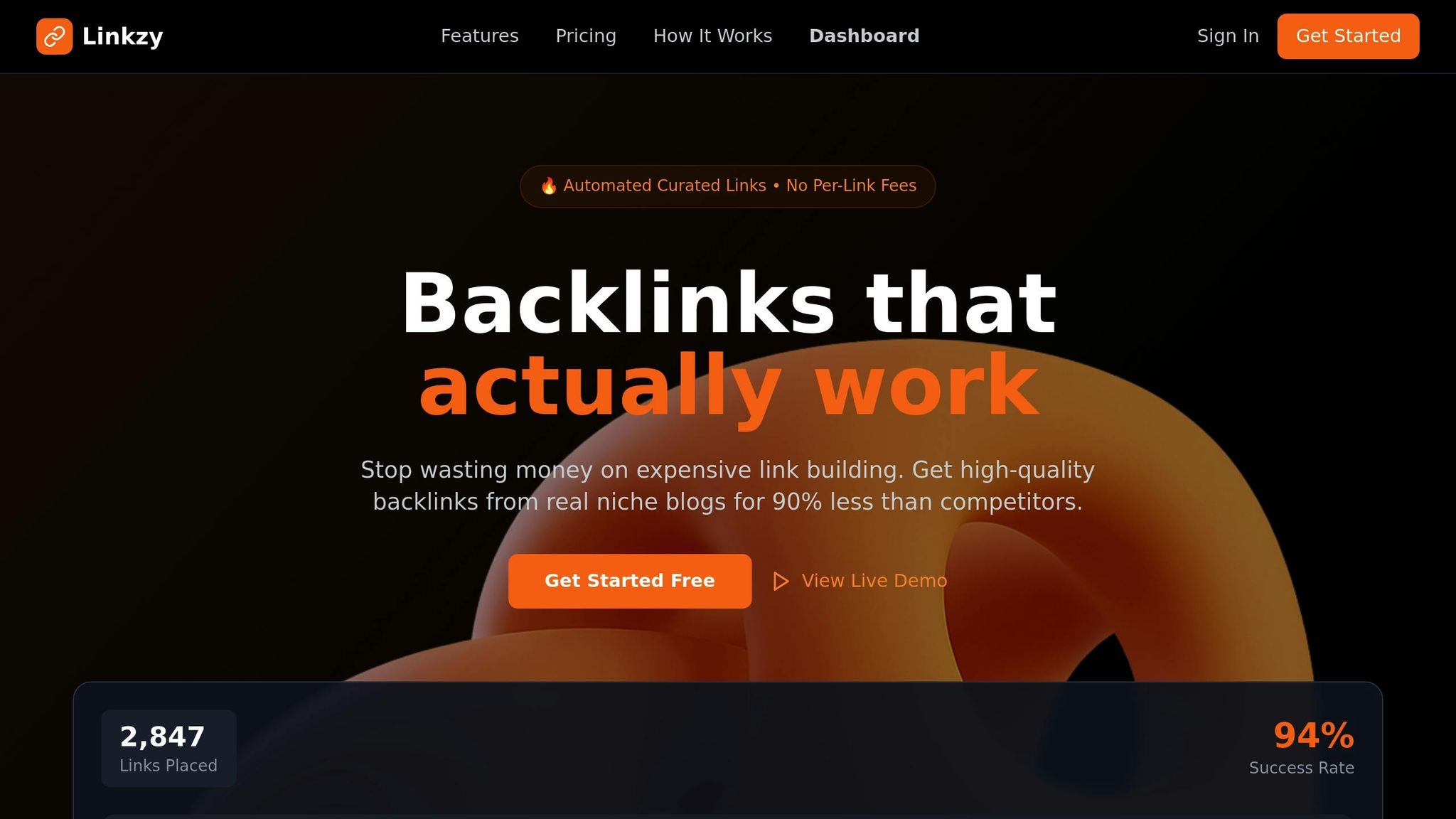
Start by visiting linkzy.ai to create your account. Select your industry niche to align with the target pages you’ve chosen to boost. You can try out the Free Plan, which gives you three credits - perfect for testing the platform without needing to provide payment details. This niche targeting ensures that the backlinks you receive come from relevant blogs.
After registering, connect your website to Linkzy. The platform supports popular website builders like WordPress, Shopify, Wix, and even custom-built sites through a plugin or API integration. Add the specific pages you want to enhance. If you’re managing multiple requests, consider upgrading to a paid plan. The Starter Plan costs $19 per month and offers five credits, while the Pro Plan at $29 per month includes fifteen credits and priority support.
Before submitting your requests, double-check your niche selection and the URLs of your target pages. When everything is ready, activate your campaign and let the system get to work.
Day 1: Automated Backlink Placements
Within the first 24 hours, Linkzy’s automated system will start placing backlinks on high-quality blogs that match your niche. Use the real-time analytics dashboard to monitor your secured backlinks and referring domains. This immediate feedback ensures your campaign stays on track and allows you to make adjustments if needed.
Day 2: Monitoring Progress and Refining Your Strategy
On the second day, return to your Linkzy dashboard to assess the progress of your campaign. Check that all backlinks are live and verify that they’ve been placed on active, relevant blogs within your industry.
If you still have credits available, you can submit additional requests to further strengthen your backlink profile. Adjust your link preferences to add variety and improve the diversity of your backlinks.
With your campaign underway, you’re now ready to focus on tracking results and scaling your efforts for long-term SEO success.
Measuring and Scaling Your Results
Once your 48-hour campaign wraps up, it’s time to get down to the nitty-gritty: tracking your results and building a system you can use again and again. Measuring your outcomes ensures your strategy isn’t just quick but also effective. Without proper tracking, you’ll have no idea if those backlinks are actually helping your rankings or just sitting idly on someone’s blog.
Tracking and Validating Your Backlinks
Start by logging into your Linkzy dashboard to review all live backlinks, the domains they’re coming from, and their activation dates. Pay attention to two key elements: domain authority and niche relevance. These are the factors that determine whether a backlink will make a real impact on your rankings.
Double-check that every backlink is live and clickable. Links can sometimes get removed or pages might go offline, so it’s crucial to verify that each link leads directly to your target page. If you find broken links or placements that don’t align with your niche, make a note of them right away.
Beyond Linkzy’s built-in tools, use external SEO platforms like Google Search Console to cross-check your backlinks. Google Search Console will show you which links have been discovered and indexed by Google. New backlinks typically appear in Search Console within 7 to 14 days, though it can take longer in some cases.
To keep things organized, set up a simple spreadsheet to track important details like referring domain, anchor text, target page, activation date, and domain authority. Update this weekly for the first month after your campaign. This will help you monitor improvements in organic traffic, keyword rankings, and domain authority over time.
Keep an eye on the performance of your target pages in the weeks following the campaign. Use Google Analytics to track changes in organic traffic to these pages. Look for growth in sessions, page views, and average time on page. Keyword rankings may also start to improve within 3 to 4 weeks.
Once you’ve confirmed your backlink data, it’s time to turn your success into a repeatable system.
Creating a Repeatable Backlink Process
With your results validated, document the steps that worked best. This will form your backlink-building playbook - a guide to help you replicate your success.
Start by identifying which pages saw the biggest boosts from your initial campaign. If certain pages experienced noticeable traffic or ranking improvements, focus on similar pages in your next campaign. Look for patterns - maybe product pages outperformed blog posts, or pages targeting long-tail keywords gained traction faster than those targeting more competitive terms.
Plan your campaigns around your budget and content schedule. For example, if you’re using the Starter Plan at $19 per month, you’ll have five credits to allocate. You can either spread those credits across five different pages or concentrate them on a single high-priority page over several months. If you’re on the Pro Plan at $29 per month, you’ll have fifteen credits, giving you more flexibility to target multiple pages simultaneously or run larger campaigns.
To maintain a natural backlink profile, rotate your target pages. Avoid using all your credits on the same page in one month. Instead, spread them out over time and across various pages. Google’s algorithms favor sites with a diverse, gradually built backlink profile over those with sudden spikes in link activity.
Schedule regular reviews to stay on top of things. For the first month, check your backlink status every two weeks, then move to monthly reviews. This helps you catch issues like removed links or changes in the quality of referring domains. If you notice recurring problems with certain placements, adjust your niche selection or target pages in future campaigns.
As you see results, consider scaling up your efforts. If your initial 48-hour campaign delivered measurable benefits - whether that’s improved rankings, more organic traffic, or actual conversions - it might be time to upgrade to a higher plan. The Pro Plan’s priority support can be particularly useful when managing multiple campaigns and needing quick assistance.
Document both your successes and setbacks. Note which niches provided the best backlinks, which target pages saw the biggest ranking improvements, and how long it took to see results. This historical data will be invaluable for planning future campaigns and justifying further investment in backlink building.
Set up automated alerts in Google Search Console and Analytics to monitor changes. A sudden drop in backlinks could signal removed links, while a traffic spike to a boosted page confirms your strategy is paying off.
Once you’ve established your system, maintaining it should only take about 30 minutes per cycle. Log into Linkzy, choose your next set of target pages, submit your requests, and let the automation do its thing. Spend another 15 minutes per week reviewing your spreadsheet and checking for any issues. This small time investment will add up over time, strengthening your backlink profile and boosting your organic visibility.
Conclusion
In just 48 hours, you can transform your backlink profile with the right mix of preparation and automation. Building high-quality backlinks in such a short timeframe isn’t just achievable - it’s a smart, efficient strategy when you combine thoughtful planning with effective tools. And here’s the best part: speed doesn’t have to come at the cost of quality. By targeting niche-relevant placements and authoritative domains, you can make genuine progress in under two days.
It all starts with preparation. Make sure your website is ready to benefit from new backlinks. This means having high-quality content, fast loading speeds, and clearly defined target pages. Knowing exactly which pages you want to prioritize - and why - ensures that when the backlinks start coming in, they’ll deliver real results for your rankings and traffic.
Then there’s automation with Linkzy, which takes the hard work out of the equation. Tasks that used to take days can now be completed in hours. With Linkzy, you can have live, authoritative backlinks in 24 to 48 hours - without spending endless hours on outreach.
But don’t stop once your links are live. Ongoing evaluation is key to turning short-term wins into long-term SEO growth. Use Linkzy’s dashboard to track your backlinks, confirm they’re active, and analyze their impact. Learn from each campaign, document what works, and fine-tune your approach for the next round.
What makes this strategy even better is its repeatability. A 48-hour sprint becomes a reliable playbook you can use again and again. Whether you’re on the $19 Starter Plan or the $29 Pro Plan, this method integrates seamlessly into your regular SEO workflow, setting you up for consistent success.
Ready to get started? Launch your first 48-hour campaign today with Linkzy’s free plan, which includes three credits - no credit card required. The sooner you begin, the sooner you’ll see your rankings improve and your organic traffic grow.
FAQs
How does Linkzy help you build high-quality backlinks in just 48 hours?
Linkzy simplifies the often time-consuming process of building backlinks by using AI-powered tools and automated outreach strategies. It quickly identifies and secures authoritative, niche-specific backlinks by analyzing your website and understanding your target audience. The result? High-quality opportunities that can enhance your SEO performance.
The platform is designed to save you time with features that automate key tasks like locating link prospects, drafting outreach messages, and handling responses - all within just 48 hours. This means you get efficient, measurable results without sacrificing quality.
What are the risks of building backlinks too quickly, and how does this approach address them?
Building backlinks too fast can trigger warnings from search engines, leading to penalties for unnatural link-building practices. This can damage your site's reputation and hurt its SEO performance.
The approach here is simple: focus on high-quality, niche-relevant backlinks and ethical outreach methods. Rather than chasing numbers, the goal is to secure authoritative links that genuinely align with your website's content. This ensures your backlink profile grows in a way that's both natural and sustainable.
How can I make sure the backlinks I build in 48 hours will improve my website's SEO over time?
To make sure your backlinks make a real difference, aim for links from trusted and relevant websites in your niche. These links carry more weight and can give your SEO efforts a stronger, more lasting boost.
Another key focus should be producing content that stands out and grabs attention. When your content offers fresh perspectives or solves a problem effectively, it becomes a natural magnet for links from other sites.
Keep in mind, SEO isn’t about instant results - it’s a marathon, not a sprint. Regularly reviewing your backlinks and prioritizing quality over sheer numbers will go a long way in keeping your website’s performance steady and strong.